
The 2023 Eleanor Roosevelt Quarter Error Collectors Are Chasing
The release of the 25-cent coin featuring Eleanor Roosevelt's portrait in 2023 was accompanied by the emergence of several production defects.
These 2023 Eleanor Roosevelt quarter error variations from the minting standard are caused by die wear and malfunctions in the United States Mint equipment.
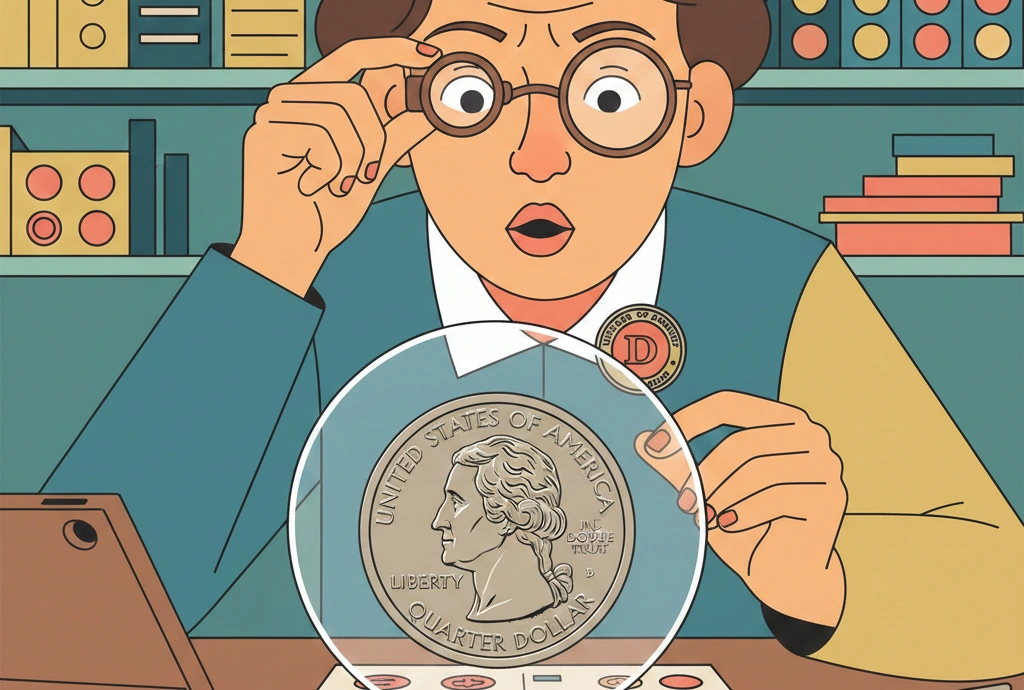
Identifying valuable specimens requires conducting a detailed inspection of the coin surface using optical instruments with at least 10x magnification.
The production cycle at the Philadelphia (P) and Denver (D) facilities led to the appearance of several defect categories.
The market value of such coins exceeds face value by tens and hundreds of times, being based on the uniqueness of the die damage.
Error Type | Localization on the Coin | Estimated Value (USD) |
Die Chip | Inscription letters, clothing details | $5 – $25 |
Die Crack | Coin field, globe area | $10 – $40 |
Struck Through | Any area of obverse or reverse | $30 – $250 |
Off-Center Strike | Image displacement | $150 – $450 |
These value indicators were recorded on trading platforms between 2023 and 2025.
Breakdown of Die Chip Errors
Die chips represent the most common defect form for the "American Women Quarters" series.
The cause of origin is the falling out of small steel fragments from the die's working surface due to thermal metal fatigue.
On the Eleanor Roosevelt coin, chips are most frequently localized within the text of the Universal Declaration of Human Rights.
Detecting extra metal resembling a drop or a raised dot inside the letters "R" or "A" confirms the presence of this error.
Specimens possessing significant chips on the reverse are valued at 15–20 USD, assuming the preservation of mint luster.
Minimal chips measuring less than 1 mm possess only symbolic value, totaling 2–3 USD above face value.
Doubled Die Reverse (DDR) Error
The doubling of image elements on the coin's reverse occurs during a repeated hub strike against the die with an offset.
For the 2023 issue, several cases of micro-doubling on the globe's meridian and parallel lines have been confirmed.
Visually, this manifests as a duplication of thin lines creating a "blurred" or thickened image effect.
The value of certified DDR specimens in MS65 grade is approximately 75–120 USD.
Price dynamics for this error type show a 5% annual growth resulting from the small number of confirmed finds in PCGS and the coin appraisal app registries.
Struck Through Errors
This defect type forms when foreign material falls between the die and the coin planchet.
Most often, this material consists of congealed grease, metal shavings, or fragments of cloth.
On Eleanor Roosevelt coins, a grease strike manifests as the absence of part of the image while maintaining a smooth field surface.
A specimen with a completely "disappeared" "UNITED STATES OF AMERICA" inscription on the obverse can be realized for 150–200 USD.
Partial absence of clothing details or globe elements is valued at 25–40 USD.
Statistics show a 10% price decrease for weakly expressed defects as new similar samples are discovered.
Off-Center Strike
Off-center striking is recognized as one of the most valuable errors, arising from incorrect planchet positioning in the minting unit.
Coins with a 5–10% offset occur rarely, possessing a value starting from 100 USD.
Specimens having preserved the "2023" date and mint mark during a 25% image displacement are valued at 350–500 USD.
The record price for an off-center strike of this type reached 480 USD at an auction in 2024.
Lacking the date or mint mark on the coin causes the value to drop by 40–50% due to the difficulty of identifying the issue year.
Impact of Coin Condition on Error Value
The numismatic value of a mint error is directly dependent on the preservation of the coin itself.
The presence of scratches, bag marks, or circulation traces reduces the error premium by 60–80%.
Coin Condition | Die Chip Premium | Struck Through Premium |
MS67 (Choice) | $25.00 | $200.00 |
MS64 (Average) | $10.00 | $50.00 |
AU58 (Circulated) | $2.00 | $15.00 |
Using gloves during coin inspection prevents metal oxidation, preserving the original surface.

Market Dynamics and Annual Statistics
The 2023 mint error market demonstrates high volatility during the first two years after release.
2023: Peak demand caused by searching for new varieties. Prices for Die Chips reached 50 USD.
2024: Market correction. Increased supply led to a 30% drop in average prices for common chips.
2025: Stabilization. An 8% price growth is observed only for rare and certified errors (Off-Center, DDR).
Investors rely on population reports recording the number of found defective specimens.
Identification and Search Methodology
The process of searching for mint errors in the Eleanor Roosevelt mintage requires a systematic approach and the coin value app.
The first stage involves acquiring unopened bank rolls containing coins without circulation traces.
The second stage follows with an inspection of the edge and rims for any chipping or irregularities.
The third stage involves microscopic examination of the inscriptions on the coin's reverse.
Special attention paid to the small details of the portrait and globe allows for identifying early stages of die failure.
Coins possessing signs of serious technical malfunctions are subject to mandatory encapsulation by grading companies to confirm the error's authenticity.
The "American Women Quarters" program draws attention to the technical aspects of coin production.
Errors on the Eleanor Roosevelt quarter will maintain value in the long term resulting from the high significance of the person.
The expected reduction in the supply of high-quality bank rolls by 2028 will lead to a 15–20% value increase for rare errors.
Mass-produced errors having thousands of duplicates will remain in a low price range.
Thus, the economic efficiency of collecting 2023 errors depends on the rarity of the specific error type and its confirmed preservation.
Careful monitoring of auction results allows for timely responses to changes in market preferences within the numismatic error segment.